
Introduction
Pattern recognition is an important concept in computer science, artificial intelligence, and machine learning. It refers to the process of identifying similarities, trends, and relationships within data. Humans use pattern recognition in everyday life, often without realizing it. For example, we recognize familiar faces, understand spoken words, and identify objects by their shapes. Computers can also learn to recognize patterns by analyzing large amounts of information. This technology helps machines make predictions, classify data, and solve different types of problems. Today, pattern recognition is widely used in healthcare, education, security, business, and many other fields.
1. What Is Pattern Recognition?
Pattern recognition is the process of examining information to identify meaningful structures or repeated characteristics. These patterns may appear in images, sounds, numbers, text, or other forms of data. The main purpose is to help a system understand what the information represents. For example, an email service can recognize common features of spam messages. Similarly, a computer can identify handwritten letters by comparing their shapes with previously learned examples. Pattern recognition can be performed by humans as well as computer systems. In modern technology, it plays an essential role in transforming raw data into useful information.
2. How Pattern Recognition Works
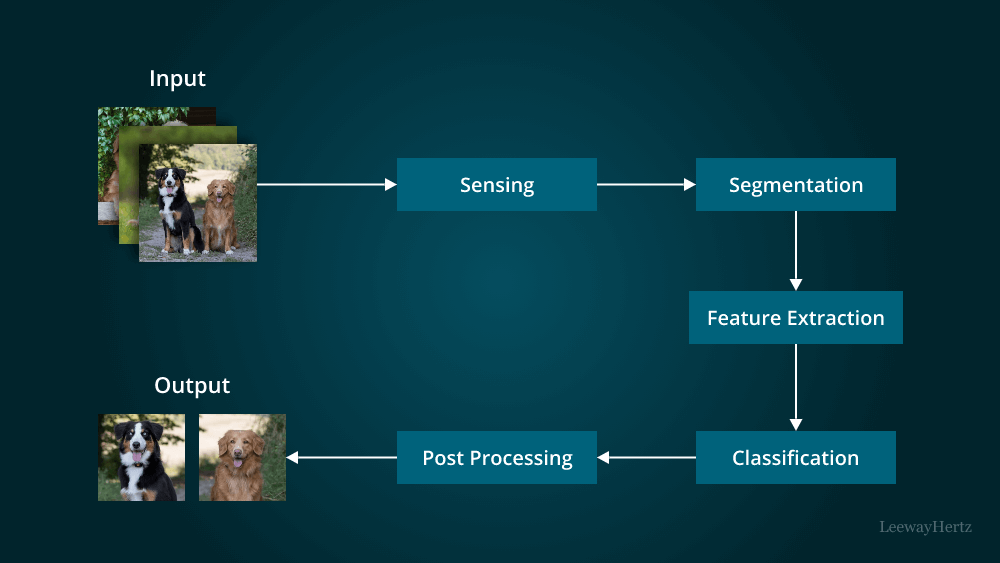
Pattern recognition generally begins with collecting relevant data from different sources. The collected information is then processed to remove errors and unnecessary details. After that, important characteristics, known as features, are identified. These features help a system distinguish one pattern from another. A recognition algorithm analyzes the selected features and compares them with learned patterns. Depending on the method used, the system may classify the information or predict a possible outcome. The final result is evaluated to determine whether the recognition process was accurate. This complete process allows computer systems to identify useful patterns in complex datasets.
3. Types of Pattern Recognition
There are several types of pattern recognition, and each serves a different purpose. Statistical pattern recognition uses mathematical techniques and probability to analyze data. Structural pattern recognition focuses on the relationships between different parts of a pattern. Template matching compares new information with existing reference patterns. Neural network-based recognition uses interconnected computational units to learn complex relationships. These approaches are applied according to the nature of the problem and the available data. For instance, image recognition may use neural networks, while simpler classification tasks may use statistical methods. Selecting the right approach can improve the accuracy and efficiency of a recognition system.
4. Pattern Recognition in Artificial Intelligence
Pattern recognition is closely connected to artificial intelligence because it enables machines to identify useful information from data. AI systems use recognition techniques to understand images, interpret speech, and process written language. These capabilities help computers perform tasks that traditionally require human intelligence. For example, a virtual assistant can recognize spoken commands and respond to a user’s request. AI-powered systems can also detect unusual activities by identifying patterns that differ from normal behavior. As technology develops, pattern recognition continues to improve the ability of machines to analyze complex situations. It is therefore an important part of building intelligent and responsive computer applications.
5. Pattern Recognition in Machine Learning
Machine learning allows computers to learn patterns from examples rather than relying entirely on manually written rules. During training, a model examines data and identifies relationships that may help it make decisions. Supervised learning uses labeled examples, while unsupervised learning searches for structures in unlabeled information. For instance, a machine learning model can learn to distinguish cats from dogs by studying many labeled images. Once trained, the model can predict the category of a new image. The quality of the results depends on the training data, model design, and evaluation process. Pattern recognition makes these learning methods useful for classification, prediction, and data analysis.
6. Applications of Pattern Recognition in Healthcare
Pattern recognition has become valuable in modern healthcare because it helps professionals examine medical information more efficiently. Computer systems can analyze medical images to identify features associated with certain diseases. They can also study patient records to detect trends and support clinical decision-making. For example, recognition software may help radiologists identify suspicious areas in an X-ray or MRI scan. In laboratories, automated systems can recognize patterns in test results and flag unusual findings. These tools may improve efficiency and support earlier investigation of potential health problems. However, medical decisions should remain under qualified professional supervision because automated systems can make mistakes.
7. Pattern Recognition in Image Processing
Image processing is one of the most common areas where pattern recognition is used. Computers analyze visual features such as shapes, edges, colors, textures, and object arrangements. These features help a system distinguish between different objects or identify specific elements within an image. Facial recognition technology, for example, compares visual characteristics to determine whether faces may belong to the same person. Self-driving vehicles also use image recognition to identify road signs, pedestrians, and other vehicles. Similar techniques support quality inspection in factories and image organization applications. The accuracy of these systems depends on image quality, lighting conditions, training data, and the complexity of the visual environment.
8. Pattern Recognition in Speech and Text
Pattern recognition helps computers understand spoken language and written information. Speech recognition systems analyze sound signals to identify words and phrases. Text-based systems examine words, sentence structures, and contextual relationships to determine meaning or classify content. These technologies support voice assistants, automatic transcription, translation tools, and customer service chatbots. Email platforms also use pattern recognition to identify spam and suspicious messages. In sentiment analysis, a computer may examine written reviews to estimate whether the expressed opinion is positive, negative, or neutral. Although these systems are becoming more capable, accents, background noise, spelling errors, and ambiguous language can still affect their performance.
9. Benefits of Pattern Recognition
Pattern recognition offers several benefits across different industries. It can process large datasets faster than manual examination and help identify relationships that might otherwise go unnoticed. Automated recognition can reduce repetitive work and improve consistency in routine tasks. Businesses may use it to understand customer preferences and forecast demand. Researchers can apply it to discover trends in scientific information, while educators can use it to study learning progress. Pattern recognition can also support fraud detection by identifying transactions that appear unusual. These advantages make it a valuable tool for decision support. Nevertheless, its effectiveness depends on suitable data, careful implementation, and regular performance evaluation.
10. Challenges and Limitations of Pattern Recognition
Despite its advantages, pattern recognition has several important limitations. A system may produce inaccurate results when its training data is incomplete, outdated, or unrepresentative. Poor-quality information can lead to incorrect classifications and unreliable predictions. Some advanced recognition models also require significant computing resources and large amounts of training data. Another challenge is that complex models may be difficult to interpret, making it harder to explain why a particular result was produced. Privacy and fairness are also important concerns, especially when systems analyze personal information. Developers must test their models carefully, protect sensitive data, and monitor performance to reduce these risks.
11. Difference Between Pattern Recognition and Data Mining
Pattern recognition and data mining are related concepts, but they do not have exactly the same purpose. Pattern recognition mainly focuses on identifying and classifying meaningful patterns in new or existing data. Data mining involves exploring large datasets to discover useful relationships, trends, and hidden information. For example, a pattern recognition system might identify whether an image contains a vehicle. A data mining process might examine years of traffic records to discover when road congestion is most common. Both techniques can support decision-making and scientific research. They are often used together, allowing organizations to discover valuable information and apply it to practical problems.
12. The Future of Pattern Recognition
The future of pattern recognition is closely linked to improvements in artificial intelligence, machine learning, and computing technology. More advanced models may become better at recognizing complex patterns in images, speech, text, and sensor data. In healthcare, these developments could strengthen diagnostic support and medical research. In transportation, recognition systems may help vehicles interpret their surroundings more effectively. Businesses may also use these technologies to improve forecasting, security, and customer services. At the same time, responsible development will remain essential. Protecting privacy, reducing bias, and maintaining human oversight will help ensure that future pattern recognition systems are reliable, useful, and fair.
Conclusion
Pattern recognition is a fundamental technology that helps humans and computers identify meaningful information from data. It supports a wide range of applications, including image processing, speech recognition, healthcare, and machine learning. By discovering similarities and relationships, recognition systems can improve efficiency and support informed decisions. However, inaccurate data, privacy concerns, and potential bias must be addressed carefully. As artificial intelligence continues to develop, pattern recognition is likely to become even more important in everyday life. Understanding its methods, benefits, and limitations can help people use this technology more effectively and responsibly.
Frequently Asked Questions (FAQs)
1. What is pattern recognition in simple words?
Pattern recognition is the process of identifying similarities, repeated features, or meaningful relationships in information. It helps people and computers recognize objects, sounds, trends, and other types of data.
2. What are the main applications of pattern recognition?
Pattern recognition is used in facial recognition, medical image analysis, speech recognition, spam detection, fraud prevention, handwriting identification, and many machine learning applications.
3. What is the difference between pattern recognition and machine learning?
Pattern recognition focuses on identifying and classifying patterns in data. Machine learning is a broader field that enables computers to learn from examples and improve their performance. Machine learning methods are often used to develop pattern recognition systems.