
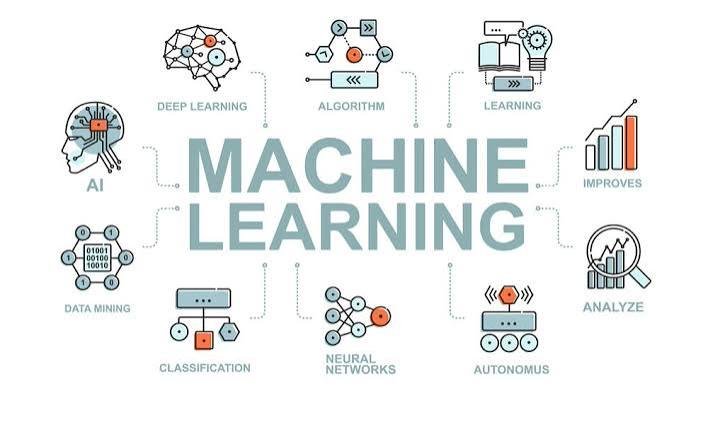
Machine Learning has become one of the most important technologies shaping the modern digital world. From the recommendations we receive while watching videos to the systems that help banks detect unusual transactions, machine learning is working quietly behind many of the services we use every day.
But what exactly is Machine Learning, and how does it work? In simple terms, Machine Learning is a branch of artificial intelligence that enables computers to learn patterns from data and make predictions or decisions without being explicitly programmed for every individual task.
As businesses collect more data and digital services become increasingly sophisticated, the importance of Machine Learning continues to grow. This article explains the basics of Machine Learning, its major types, real-world applications, benefits, challenges, and future potential.
What Is Machine Learning?
Machine Learning is a technology that allows computer systems to learn from examples and improve their performance over time. Instead of giving a computer a fixed set of instructions for every possible situation, developers provide algorithms with data that can be analyzed to identify patterns.
For example, imagine a system designed to identify spam emails. Rather than manually programming every possible spam message, developers can train a Machine Learning model using thousands of examples of spam and legitimate emails. The model analyzes characteristics within those messages and learns patterns that help it classify future emails.
The quality of a Machine Learning system depends heavily on the data used to train it. Good-quality, relevant, and sufficiently diverse data can help a model produce more useful results.
How Does Machine Learning Work?
Although Machine Learning systems can be highly sophisticated, the basic process can be understood through several steps.
First, data is collected from appropriate sources. This data could include text, images, numbers, audio, customer interactions, or other types of information.
Next, the data is prepared. Real-world data often contains missing values, duplicate records, errors, or irrelevant information. Cleaning and organizing the data is an important part of developing a reliable model.
The prepared data is then used to train a Machine Learning algorithm. During training, the algorithm searches for relationships and patterns within the information.
After training, the model is tested using data that it has not previously seen. This helps developers evaluate how well the model performs on new information.
Finally, the model can be deployed in an application or business process. Its performance should continue to be monitored because data and real-world conditions can change over time.
Main Types of Machine Learning
Machine Learning can generally be divided into several major categories. Each approach is useful for different types of problems.
1. Supervised Learning
Supervised Learning uses labeled training data. In other words, the system is provided with examples where the desired answer is already known.
For instance, a model could be trained using information about houses, including their locations, sizes, and historical selling prices. The model can learn relationships between these characteristics and prices, then estimate the price of another house.
Common supervised learning tasks include classification and regression.
Classification is used when the output belongs to a category, such as determining whether an email is spam or legitimate. Regression is used when the desired output is a numerical value, such as predicting a property’s price.
2. Unsupervised Learning
Unsupervised Learning works with data that does not have predefined labels. The algorithm attempts to discover meaningful structures or patterns on its own.
One common example is customer segmentation. A company may have information about thousands of customers but no predefined groups. An unsupervised learning algorithm can analyze purchasing behavior and identify customers with similar characteristics.
Clustering is one of the best-known techniques used in unsupervised learning.
3. Reinforcement Learning
Reinforcement Learning involves an agent interacting with an environment and learning through feedback. The system receives rewards for desirable actions and negative feedback for undesirable ones.
This approach has been used in areas such as robotics, game-playing systems, and optimization. Over many interactions, the system can learn strategies that improve its performance.
Real-World Applications of Machine Learning
Machine Learning is no longer limited to research laboratories. It is being used across many industries and everyday applications.
Healthcare
Machine Learning can help healthcare professionals analyze large amounts of medical information. Models may assist with medical image analysis, risk assessment, research, and the identification of patterns in patient data.
These systems are generally designed to support professionals rather than replace qualified medical judgment.
Finance
Financial institutions use Machine Learning for tasks such as fraud detection, risk analysis, customer service, and transaction monitoring.
For example, a model can learn what normal transaction behavior looks like and flag unusual activity for further investigation.
E-Commerce
Online stores use Machine Learning to improve customer experiences. Recommendation systems can analyze browsing behavior, previous purchases, and product interactions to suggest products that may be relevant to a customer.
Machine Learning can also help businesses forecast demand and manage inventory.
Transportation
Transportation companies can use Machine Learning for route optimization, demand forecasting, traffic prediction, and vehicle maintenance.
Modern navigation applications, for example, can analyze information from multiple sources to estimate travel times and suggest alternative routes.
Cybersecurity
Machine Learning can help identify unusual network activity and potential security threats. Because cyberattacks can change rapidly, systems capable of detecting patterns in large volumes of data can be valuable components of a broader cybersecurity strategy.
Entertainment
Streaming platforms can use Machine Learning to personalize recommendations. The system may consider what users watch, search for, skip, or save when generating suggestions.
This type of personalization has become a familiar part of modern digital entertainment.
Benefits of Machine Learning
There are several reasons organizations are investing in Machine Learning.
One major advantage is the ability to process large quantities of data efficiently. Humans may struggle to identify complex patterns across millions of records, while Machine Learning systems can analyze such datasets using computational methods.
Machine Learning can also automate repetitive tasks. This may allow employees to spend more time on activities requiring creativity, communication, and human judgment.
Another benefit is personalization. Businesses can use models to provide experiences that are more relevant to individual users.
Machine Learning can also support better forecasting. When historical and current data contain useful patterns, predictive models can help organizations estimate future outcomes.
Challenges of Machine Learning
Despite its advantages, Machine Learning is not a perfect technology.
Data Quality
Poor-quality data can lead to poor-quality results. If training information is incomplete, inaccurate, or unrepresentative, the resulting model may make unreliable predictions.
Bias
Machine Learning models can reproduce or amplify biases present in their training data. Developers need to evaluate datasets and model outcomes carefully to identify potential problems.
Privacy
Many Machine Learning applications rely on large quantities of data. Organizations must handle personal and sensitive information responsibly and follow applicable privacy requirements.
Interpretability
Some advanced models can be difficult to explain. In situations where decisions have significant consequences, understanding why a model produced a particular result can be important.
Maintenance
A Machine Learning model is not necessarily a one-time project. As user behavior, markets, technology, and other conditions change, model performance may decline. Continuous monitoring and periodic updates can therefore be necessary.
Machine Learning vs. Artificial Intelligence
The terms Artificial Intelligence and Machine Learning are sometimes used interchangeably, but they are not exactly the same.
Artificial Intelligence is the broader concept of creating systems capable of performing tasks associated with intelligent behavior. Machine Learning is one of the major approaches used to develop AI systems.
In simple terms, Machine Learning is a part of Artificial Intelligence. Deep Learning is a further specialized area within Machine Learning that uses multi-layered neural networks to learn complex patterns.
Understanding this relationship makes it easier to see why Machine Learning is so important to modern AI development.
How to Start Learning Machine Learning
People interested in Machine Learning do not necessarily need to begin with advanced mathematics or complicated research papers.
A good starting point is to understand basic programming, particularly Python, because it is widely used for data analysis and Machine Learning development.
Students should also learn fundamental concepts such as statistics, probability, data preparation, model training, evaluation, and overfitting.
After learning the fundamentals, beginners can work on small practical projects. For example, they might build a simple model that predicts prices, classifies text, or groups similar data points.
Practical experience is valuable because it teaches learners how real-world data differs from clean examples found in tutorials.
The Future of Machine Learning
The future of Machine Learning is likely to involve increasingly capable systems, better tools, and broader adoption across industries.
Organizations are already exploring ways to use Machine Learning for automation, forecasting, personalization, scientific research, and decision support. As computing resources and data-processing techniques continue to improve, new applications are likely to emerge.
However, technological progress also creates responsibilities. Businesses and developers will need to pay attention to privacy, security, fairness, transparency, and the impact of automated decisions.
The most useful future systems may not simply be those that produce impressive predictions. They will also need to be reliable, appropriately tested, understandable where necessary, and designed around genuine user needs.
Conclusion
Machine Learning has transformed the way computers interact with data and solve complex problems. By learning patterns from examples, Machine Learning systems can perform tasks that would otherwise require extensive manual programming.
From healthcare and finance to e-commerce, transportation, cybersecurity, and entertainment, the technology already plays an important role in everyday life.
At the same time, Machine Learning comes with challenges involving data quality, bias, privacy, transparency, and ongoing maintenance. Understanding both its capabilities and its limitations is essential for using the technology responsibly.
As the digital world continues to generate enormous amounts of information, Machine Learning will likely remain an important part of technological development. For students, professionals, entrepreneurs, and technology enthusiasts, learning the fundamentals of Machine Learning can provide a valuable foundation for understanding one of the most influential technologies of the modern era.