
Introduction
Reinforcement Learning is an important branch of artificial intelligence that enables machines to learn through experience. It allows an agent to make decisions by interacting with its environment and receiving rewards or penalties. Unlike traditional learning methods, it does not always require labeled examples. Instead, the system improves its behavior through repeated actions and feedback. Reinforcement Learning is widely used in robotics, gaming, automation, and intelligent decision-making systems.
1. What Is Reinforcement Learning?
Reinforcement Learning is a machine learning approach in which an agent learns to make better decisions over time. The agent interacts with an environment and observes the results of its actions. Positive rewards encourage useful behavior, while negative rewards discourage unwanted actions. Through repeated practice, the agent develops a strategy for achieving its goals. This learning process helps artificial intelligence systems handle complex tasks.
2. How Reinforcement Learning Works
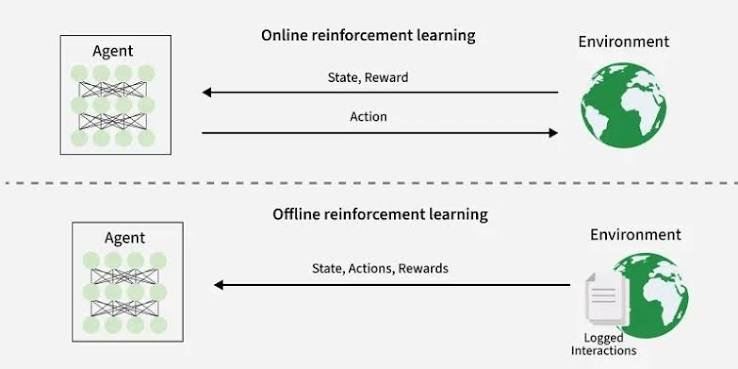
The Reinforcement Learning process begins when an agent observes the current state of its environment. It selects an action based on its existing knowledge or learning strategy. The environment then responds by providing a new state and a reward or penalty. The agent uses this feedback to improve future decisions. Repeating this cycle allows the system to discover more effective ways of solving problems.
3. Main Components of Reinforcement Learning
Several essential components work together in Reinforcement Learning. The agent is the learner that makes decisions, while the environment is the world in which it operates. Actions are the choices made by the agent, and states describe the current situation. Rewards provide feedback about the results of those actions. A policy guides decision-making, while a value function estimates the long-term benefits of different choices.
4. Types of Reinforcement Learning
Reinforcement Learning can be divided into different approaches depending on how an agent learns. Model-based methods use a model of the environment to predict possible outcomes. Model-free methods learn directly from experience without requiring a complete environment model. Other approaches include value-based learning, policy-based learning, and actor-critic methods. Each approach has different strengths and can be selected according to the problem being solved.
5. Popular Reinforcement Learning Algorithms
Several algorithms help machines learn effective strategies. Q-learning estimates the value of taking particular actions in different states. Deep Q-Networks combine Q-learning with deep neural networks to handle more complex environments. Policy gradient methods directly improve the agent’s decision-making policy. Proximal Policy Optimization is another widely used method designed to make policy updates more stable. The choice of algorithm depends on the task, available data, and computational resources.
6. Applications of Reinforcement Learning
Reinforcement Learning has practical applications across many industries. In robotics, it helps machines learn movement, object handling, and navigation. In gaming, it enables artificial intelligence systems to develop strategies and compete against human players. In transportation, it can support traffic signal control and route optimization. Businesses may also explore it for resource allocation, scheduling, and operational planning. These applications demonstrate its potential for improving automated decision-making.
7. Reinforcement Learning in Deep Learning
Deep Reinforcement Learning combines reinforcement learning techniques with deep neural networks. This combination allows agents to process complex information, including images, sensor readings, and large state spaces. For example, an agent can learn to play a video game by observing the screen and receiving feedback about its performance. Deep learning helps the agent recognize patterns, while reinforcement learning guides its actions toward long-term goals. However, training these systems may require substantial computing power and many interactions.
8. Benefits of Reinforcement Learning
One major benefit of Reinforcement Learning is its ability to learn from experience rather than relying entirely on labeled training examples. It can adapt its strategy when conditions change and improve performance through repeated feedback. The approach is particularly useful for sequential decision-making, where one action can influence future outcomes. It can also discover strategies that may not be obvious to human programmers. With suitable training and evaluation, these capabilities can support more flexible intelligent systems.
9. Challenges of Reinforcement Learning
Despite its advantages, Reinforcement Learning presents several challenges. Training can require many interactions, making the process slow or expensive in real-world settings. Poorly designed reward functions may encourage unintended behavior. Agents must also balance exploration, which involves trying new actions, with exploitation, which means using actions already known to be effective. In addition, performance may be unreliable when an agent encounters unfamiliar situations. Careful testing, safety controls, and reward design are therefore essential.
10. Reinforcement Learning vs. Supervised Learning
Reinforcement Learning and supervised learning differ in how they receive feedback. Supervised learning uses labeled examples to teach a model the correct or expected output. Reinforcement Learning instead evaluates actions through rewards and penalties, often over a sequence of decisions. Supervised learning is commonly used for tasks such as image classification and prediction. Reinforcement Learning is more suitable for problems involving interaction, planning, and long-term consequences, although both methods can be combined in some systems.
11. The Future of Reinforcement Learning
The future of Reinforcement Learning is closely connected to progress in robotics, autonomous systems, and artificial intelligence. Researchers are exploring ways to make training more efficient, reduce data requirements, and improve the safety of learned behavior. Combining reinforcement learning with simulations can also help agents practice before operating in real environments. As these methods develop, they may contribute to more capable systems for manufacturing, healthcare support, logistics, and scientific research. Responsible development will remain important to ensure that these systems behave reliably.
12. Best Practices for Learning Reinforcement Learning
Beginners can start learning Reinforcement Learning by studying basic concepts such as states, actions, rewards, policies, and value functions. Understanding probability, linear algebra, and introductory Python programming can make the subject easier to learn. Small projects, such as training an agent to navigate a simple grid, provide useful hands-on experience. Libraries and simulation environments can help learners experiment with different algorithms. Evaluating results across multiple trials is also important because a single successful run does not guarantee consistent performance.
Conclusion
Reinforcement Learning is a powerful approach that teaches intelligent systems to make decisions through interaction and feedback. Its methods are useful in robotics, gaming, automation, and other areas involving sequential choices. Although training efficiency, reward design, and safety remain important challenges, ongoing research continues to improve the field. Understanding its core components and algorithms provides a strong foundation for exploring advanced artificial intelligence techniques. With careful implementation, Reinforcement Learning can help solve complex problems and support more adaptive technologies.
Frequently Asked Questions (FAQs)
1. What is Reinforcement Learning in simple words?
Reinforcement Learning is a machine learning method in which an agent learns through trial and error. It receives rewards or penalties based on its actions and gradually improves its decisions.
2. What are the main applications of Reinforcement Learning?
Its main applications include robotics, video games, autonomous navigation, traffic management, industrial automation, and resource optimization. It is especially useful when actions affect future results.
3. Is Reinforcement Learning difficult to learn?
Reinforcement Learning can be challenging because it involves probability, optimization, and sequential decision-making. However, beginners can understand the fundamentals by studying simple examples, practicing Python, and gradually exploring more advanced algorithms.